
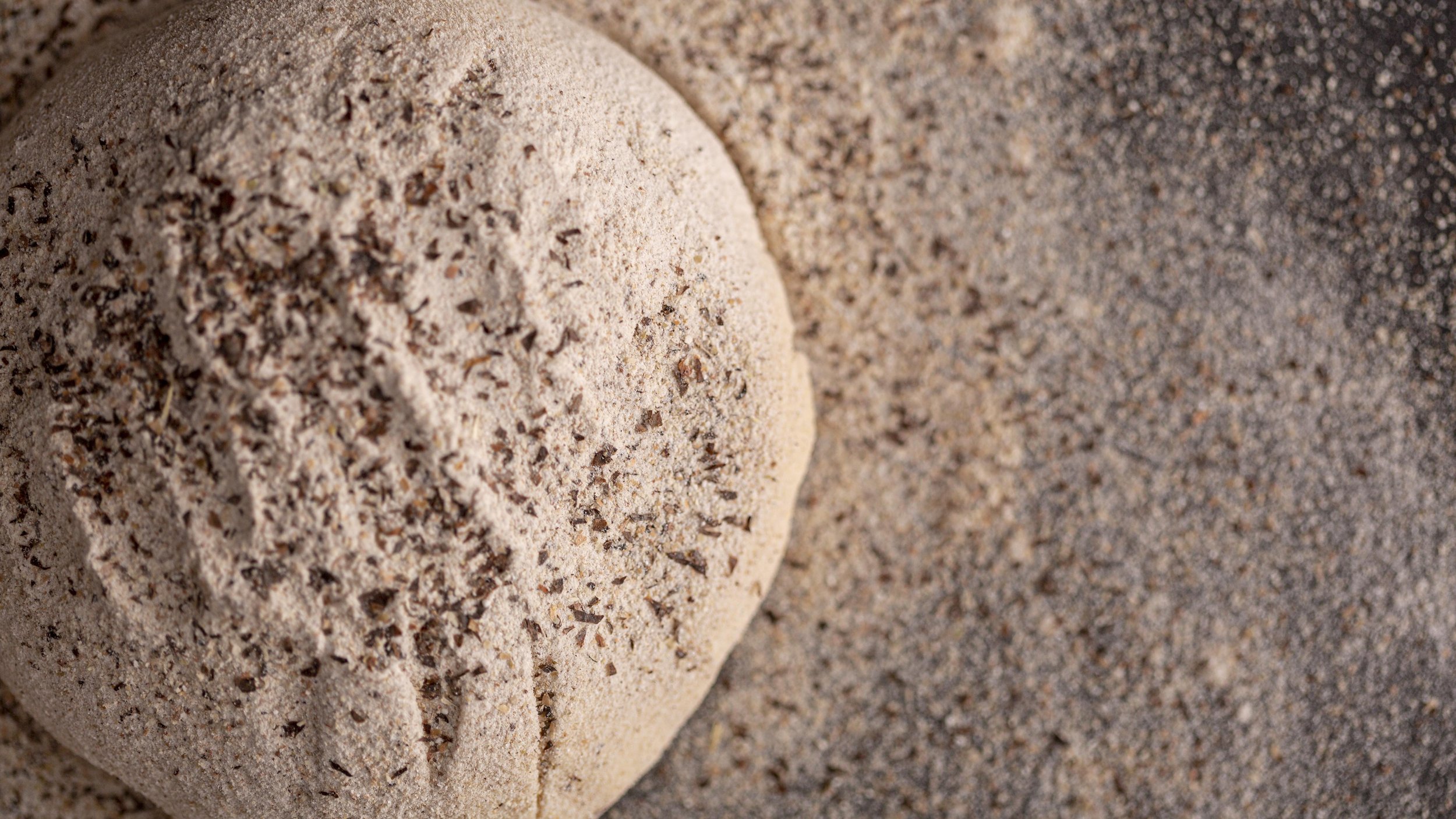
If you've ever spotted "wheat starch" on a gluten free food label and done a double-take, you're not alone. It sounds like a contradiction, but gluten free wheat starch is a real, well-researched ingredient that's been safely used in gluten free foods for decades. Here's everything you need to know.

A clear guide for celiac and gluten-free coMMUNITIESGluten Free Wheat Starch, Explained.
The Ingredient That Confuses Everyone, WHEAT STARCH.What is gluten-free wheat starch?
Wheat starch starts with wheat, but it is not the same as wheat flour.
Wheat flour contains the full wheat grain components, including starch, fiber, and protein. One of those proteins is gluten, which people with celiac disease and gluten-related disorders must avoid.
Gluten-free wheat starch is produced by separating the starch from the protein portion of wheat. During this process, the gluten-containing proteins are removed through repeated washing and refinement. The result is a wheat-derived starch that can be used in gluten-free foods only when it meets strict gluten limits.
In the United States, foods labeled gluten-free must contain less than 20 parts per million of gluten under FDA standards. This is the required threshold for any product using a gluten-free claim, including products made with gluten-free wheat starch.
This distinction is important: wheat starch is not automatically gluten-free. Only wheat starch that has been specifically processed to remove gluten and used in a finished product that meets gluten-free standards should be considered appropriate for a gluten-free diet.
Gluten-free baking is difficult because gluten plays a major role in traditional bread. It helps create elasticity, structure, and chew.
Without gluten, many breads become dry, crumbly, gummy, or dense. Bagels are especially difficult because they rely on structure and bite more than most baked goods.
Gluten-free wheat starch helps improve the texture of gluten-free baked goods. It supports a softer interior, better chew, and a more familiar bread-like eating experience.
For Original Sunshine, that matters. Our goal is not to make a bagel that is “good for gluten-free.” Our goal is to make a gluten-free bagel that tastes and feels like the real thing.
Why use gluten-free wheat starch?
For people with celiac disease, the concern is gluten.
Celiac disease is a serious autoimmune disease where eating gluten can damage the small intestine. For people with celiac disease, avoiding gluten is not a preference. It is medically necessary.
Gluten-free wheat starch has been studied in people with celiac disease. A long-term follow-up study published in Scandinavian Journal of Gastroenterology concluded that wheat-starch-based gluten-free flour products were not harmful in the treatment of celiac disease. PubMed
Another randomized prospective study found that the dietary response to a wheat-starch-based gluten-free diet was as good as the response to a naturally gluten-free diet in patients with newly detected celiac disease. PubMed
Original Sunshine products are made to meet gluten-free standards and are intended for people avoiding gluten, including people with celiac disease and gluten sensitivity.
That said, individual medical needs can vary. Anyone with celiac disease who is unsure about gluten-free wheat starch should speak with a physician, dietitian, or healthcare provider.
Is gluten-free wheat starch safe for people with celiac disease?
This is one of the most important points to understand.
Gluten-free and wheat-free are not the same thing.
Celiac disease is an autoimmune reaction to gluten. A wheat allergy is a separate immune response to wheat proteins. These are different conditions with different dietary requirements.
Because gluten-free wheat starch comes from wheat, it is not suitable for people with a wheat allergy, even when the finished food is gluten-free.
This is why products made with gluten-free wheat starch must still declare wheat on the label.
A product can be labeled gluten-free and still say contains wheat. That is not a contradiction. It means the product meets gluten-free standards, but includes an ingredient derived from wheat.
The simplest way to think about it:
For celiac disease or gluten sensitivity: look for gluten-free products that meet gluten-free standards.
For wheat allergy: avoid wheat-derived ingredients, including gluten-free wheat starch.
Gluten-free does not always mean wheat-free.
Why the label may say “contains wheat”
If a product contains gluten-free wheat starch, wheat must still be listed as an allergen.
That disclosure is required because the ingredient comes from wheat. It is there for people with wheat allergies, not because the product necessarily contains gluten above the gluten-free limit.
In plain terms:
“Gluten-free” refers to gluten content.
“Contains wheat” refers to allergen disclosure.
Both statements can appear on the same product because they are addressing two different concerns.
For people managing celiac disease, gluten content is the key issue. For people with wheat allergy, wheat-derived ingredients are the key issue.
What to look for on the label
The Celiac Disease Foundation recommends looking for a gluten-free label first, then checking the ingredient list and allergen statement to understand whether a product is appropriate for your needs.
If you see wheat starch in a gluten-free product, check these things:
1. The product is labeled gluten-free.
Do not assume wheat starch is gluten-free unless the product clearly makes a gluten-free claim.
2. The brand explains its standards.
A company using gluten-free wheat starch should be able to explain how the product meets gluten-free requirements. Gluten Free Watchdog recommendations
Gluten-free wheat starch can sound confusing because it comes from wheat. But the relevant issue for celiac disease is gluten, not wheat as a source ingredient.
When wheat starch is processed to remove gluten and the finished product meets gluten-free standards, it can be used in gluten-free foods.
At Original Sunshine, gluten-free wheat starch helps us create bagels with the texture, chew, and structure people expect from traditional bread, without relying on gluten.
Our purpose is simple: to make gluten-free food that is clear, safe, and genuinely satisfying.
Because people eating gluten-free should not have to settle.
The bottom line
Sources
FDA: Questions and Answers on the Gluten-Free Food Labeling Final Rule
https://www.fda.gov/food/nutrition-food-labeling-and-critical-foods/questions-and-answers-gluten-free-food-labeling-final-rule
FDA: Gluten-Free Labeling of Foods
https://www.fda.gov/food/nutrition-food-labeling-and-critical-foods/gluten-free-labeling-foods
Celiac Disease Foundation: Label Reading & the FDA
https://celiac.org/gluten-free-living/gluten-free-foods/label-reading-the-fda/
Celiac Disease Foundation: What is Celiac Disease?
https://celiac.org/about-celiac-disease/what-is-celiac-disease/
Kaukinen et al., 1999: Wheat starch-containing gluten-free flour products in the treatment of coeliac disease and dermatitis herpetiformis
https://pubmed.ncbi.nlm.nih.gov/10192194/
Peräaho et al., 2003: Wheat-starch-based gluten-free products in the treatment of newly detected coeliac disease
https://pubmed.ncbi.nlm.nih.gov/12622768/